
The competitive landscape for local service businesses has transformed dramatically in 2026. Whether operating in high-stakes markets like Marbella, London, Milan, or Madrid, businesses face unprecedented pressure to optimize every revenue touchpoint while maintaining exceptional service delivery. Scaling AI capabilities within revenue operations has become the defining factor separating businesses that thrive from those that merely survive. This strategic imperative requires a systematic approach to implementation, measurement, and continuous optimization across the entire revenue lifecycle.
The Revenue Operations Challenge in Competitive Markets
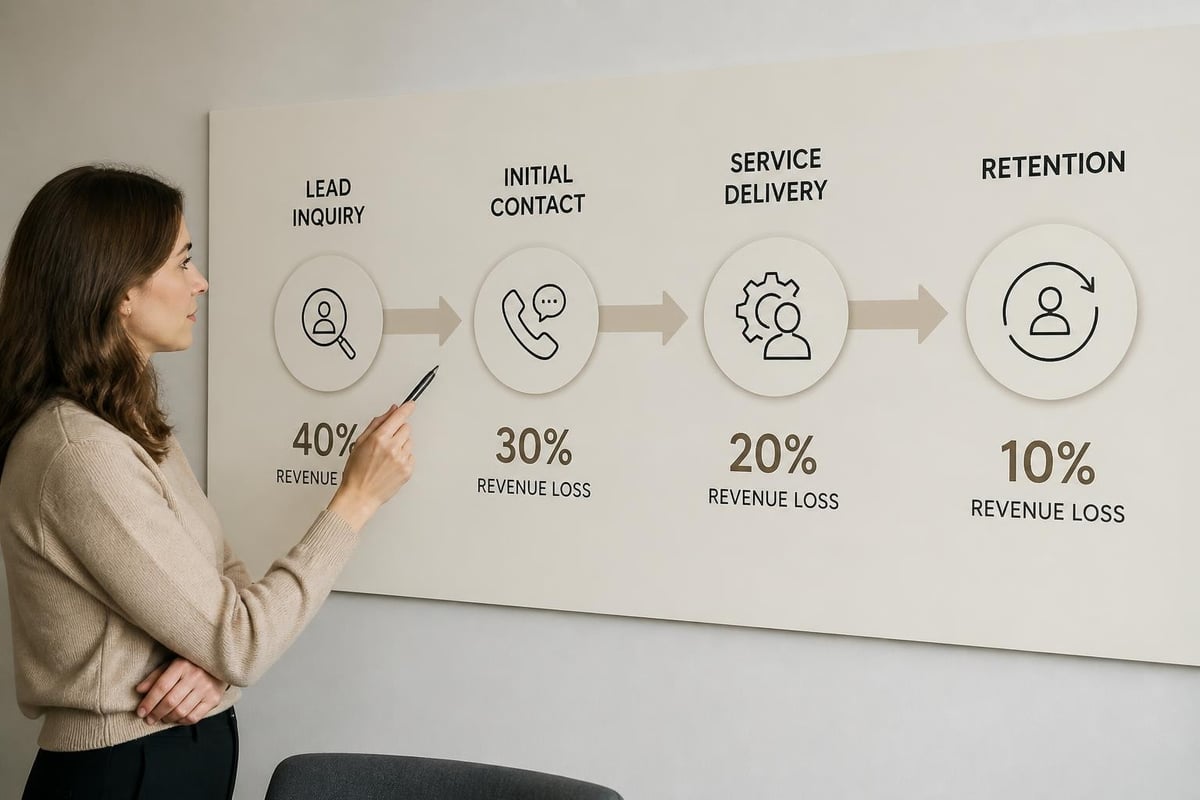
Local service businesses in competitive metropolitan environments encounter unique operational pressures. In markets where customer acquisition and marketing costs continue to climb and service expectations reach new heights, traditional manual processes simply cannot keep pace. Revenue leakage occurs at multiple stages: missed follow-ups, delayed responses, inconsistent pricing, and poor retention mechanisms all compound into significant lost opportunities.
The scale of this challenge becomes clear when examining typical revenue leak patterns:
Unconverted leads from initial inquiry to booking: 35-50% average loss
Follow-up abandonment after first contact: 40-60% drop-off rate
Retention failures from completed service to repeat booking: 70-80% churn
Referral capture from satisfied customers: 85-95% untapped potential
These metrics represent substantial capital left on the table every month. For a service business generating €50,000 monthly revenue, these leaks can represent €75,000-€100,000 in unrealized annual income. The compounding effect over multiple years creates a massive growth differential between optimized and unoptimized operations.
Infrastructure Requirements for Scaling AI
Before implementing AI-driven revenue operations, businesses must establish foundational infrastructure. This groundwork determines whether scaling AI efforts deliver measurable ROI or become expensive experiments without clear outcomes.
Critical infrastructure components include:
Unified data collection across all customer touchpoints and interaction channels
Clean CRM hygiene with standardized fields, validation rules, and deduplication protocols
Integration architecture connecting scheduling, payment, communication, and service delivery systems
Measurement frameworks defining key performance indicators and tracking mechanisms
Process documentation establishing current-state workflows before automation
Many businesses attempt to bypass these foundational steps, implementing AI tools without proper data infrastructure. The result is fragmented insights, inconsistent automation, and ultimately abandoned technology investments. Business automation systems require this structural foundation to function effectively at scale.
Infrastructure Element | Manual Process Cost | AI-Optimized Cost | Efficiency Gain |
|---|---|---|---|
Lead qualification | 15-20 min/lead | 30-60 sec/lead | 95% reduction |
Follow-up scheduling | 8-12 min/client | Automated | 100% reduction |
Quote generation | 20-30 min/quote | 2-3 min/quote | 90% reduction |
Retention outreach | Often skipped | Systematic & automated | Infinite improvement |
Strategic Approaches to Scaling AI Revenue Operations
Scaling AI within revenue operations requires phased implementation aligned with business maturity and resource capacity. Businesses in highly competitive markets like Marbella cannot afford to experiment without strategy, as every operational gap represents opportunity for competitors to capture market share.
Phase One: Revenue Leak Identification and Quantification
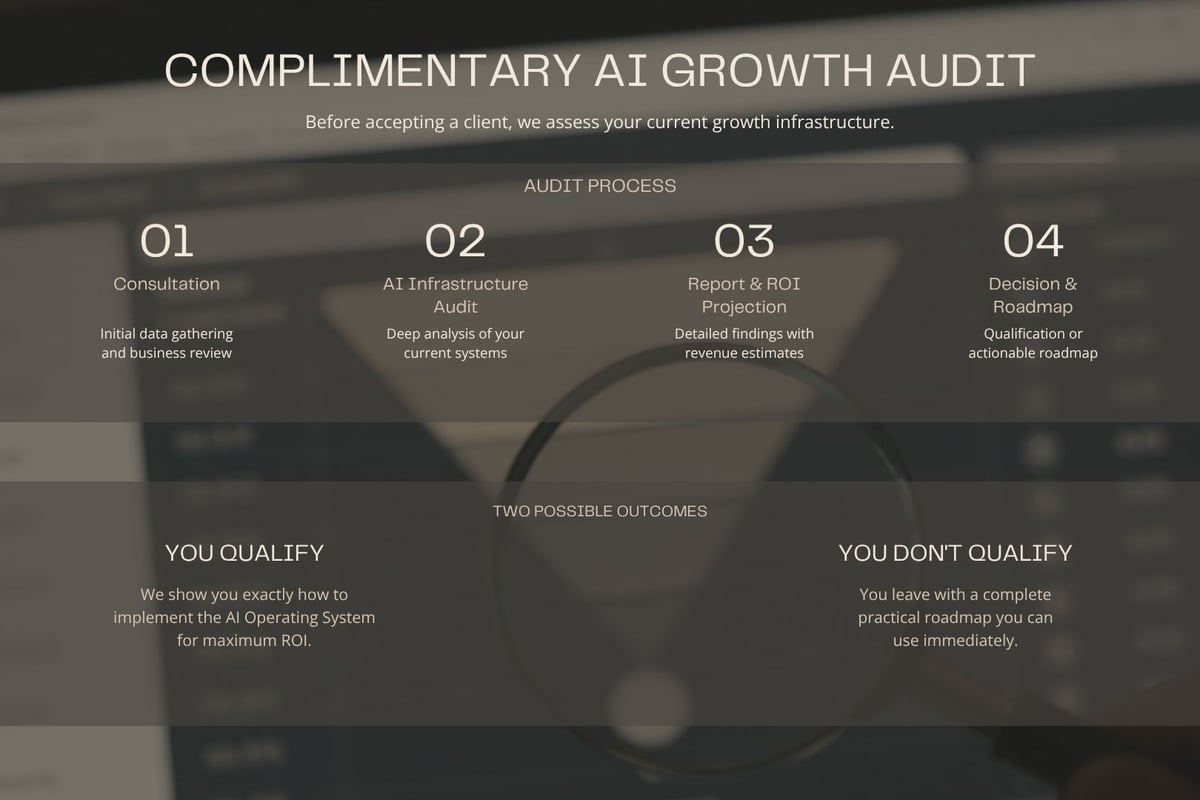
The first phase focuses on visibility before optimization. Most service businesses lack comprehensive understanding of where revenue escapes their operational grasp. AI-powered analysis tools can audit thousands of customer interactions, identifying pattern-based leakage points that manual review would miss.
This diagnostic phase employs natural language processing to analyze conversation patterns, sentiment tracking to identify service failure indicators, and behavioral analysis to predict churn likelihood. The output is a quantified revenue leak assessment showing exactly how much potential income is lost at each stage of the customer journey.
For businesses operating in markets with high customer lifetime values, such as premium service providers in Milan or Madrid, this quantification often reveals six-figure annual opportunities. A well-executed AI Scaling Strategy Audit can surface these hidden revenue streams by examining the structural gaps between current performance and optimized potential. This rigorous assessment identifies not just where revenue leaks occur, but quantifies their commercial impact and prioritizes intervention points based on maximum recovery potential.
Phase Two: Automated Capture and Conversion Systems
Once revenue leaks are mapped and quantified, the second phase implements AI-driven capture mechanisms. These systems operate continuously, ensuring no lead inquiry goes unacknowledged, no follow-up sequence breaks down, and no conversion opportunity slips through operational gaps.
Automated capture systems typically include:
Intelligent lead routing based on service type, urgency, and capacity
Dynamic response systems providing immediate acknowledgment and information
Qualification workflows that segment leads by conversion probability
Automated scheduling that eliminates back-and-forth communication friction
Proposal generation systems that maintain pricing consistency and professionalism
The technical implementation of these systems requires careful attention to model serving infrastructure and feature consistency. Organizations scaling AI for production use often leverage platforms like KServe to ensure reliable, low-latency inference across multiple models simultaneously. This becomes particularly important when running real-time lead qualification, sentiment analysis, and recommendation engines concurrently.
Feature engineering for these systems demands robust feature stores to maintain consistency between training and inference. The Feast framework provides production-grade patterns for managing features at scale, ensuring that AI models have access to consistent, fresh data regardless of deployment environment.

Retention and Recovery: The Compounding Revenue Layer
While acquisition and conversion capture immediate attention, retention and reactivation represent the highest-leverage opportunities for scaling AI impact. The economics are compelling: acquiring new customers costs 5-7 times more than retaining existing ones, yet most service businesses invest disproportionately in acquisition while neglecting systematic retention.
AI-Driven Retention Mechanisms
Retention automation operates on predictive signals rather than reactive interventions. By analyzing historical behavior patterns, service quality indicators, and engagement metrics, AI systems can identify churn risk weeks or months before customers actually defect.
Predictive retention systems monitor multiple signal categories:
Service interval adherence (detecting when regular customers deviate from established patterns)
Communication engagement (tracking response rates and interaction quality degradation)
Competitive vulnerability indicators (identifying customers matching high-churn profiles)
Satisfaction proxy metrics (analyzing sentiment in communications and feedback)
Financial behavior changes (detecting payment delays or resistance to upsells)
These signals feed into automated intervention workflows designed to re-engage at-risk customers before they're lost. In competitive markets like Marbella, where businesses fight for every customer relationship, this proactive approach creates sustainable competitive advantage. Companies partnering with Leverage Scaling in these environments report retention improvement of 15-25 percentage points within the first six months of implementation.
Reactivation Economics and Automation
Beyond active customer retention, dormant customer reactivation represents enormous untapped value. Most service businesses accumulate hundreds or thousands of past customers who simply stopped engaging over time. Manual reactivation efforts prove inconsistent and resource-intensive, so these lists remain dormant assets generating zero return.
AI-powered reactivation systematically works these lists through personalized, behavioral-triggered campaigns. Machine learning models segment dormant customers by reactivation probability, optimal timing, preferred communication channel, and likely service interest based on historical behavior and current market conditions.
Reactivation Segment | Manual Success Rate | AI-Optimized Rate | Volume Capacity |
|---|---|---|---|
Recent dormant (3-6 months) | 8-12% | 18-25% | Unlimited |
Medium dormant (6-18 months) | 3-5% | 10-15% | Unlimited |
Long dormant (18+ months) | 1-2% | 4-8% | Unlimited |
Never converted leads | <1% | 3-6% | Unlimited |
The capacity dimension proves particularly valuable. Manual reactivation efforts typically reach 50-100 contacts monthly due to personalization and follow-up requirements. AI-powered systems can execute thousands of personalized reactivation sequences simultaneously, turning dormant databases into consistent monthly revenue streams.
Cost Optimization and Resource Allocation When Scaling AI
As businesses expand their AI capabilities, cost management becomes critical to maintaining positive ROI. The computational requirements for training and serving sophisticated models can escalate quickly without proper architecture and governance.
Training Infrastructure and Distributed Computing
Modern revenue operations AI relies heavily on transformer-based language models for customer communication analysis, natural language generation for automated responses, and deep learning for behavioral prediction. These models demand significant computational resources for initial training and ongoing fine-tuning.
Organizations serious about scaling AI should implement distributed training frameworks to manage costs and reduce time-to-deployment. DeepSpeed provides production-tested optimization techniques for training large models efficiently, including memory optimization, pipeline parallelism, and gradient accumulation strategies that dramatically reduce hardware requirements.
For service businesses without deep AI engineering teams, managed solutions abstract this complexity while maintaining cost efficiency. The key is selecting partners who build infrastructure designed for your specific operational context rather than generic AI platforms requiring extensive customization.
Inference Cost Management at Scale
Training costs are one-time or periodic expenses, but inference costs compound continuously as AI systems serve predictions in production. A busy service business might generate tens of thousands of AI inferences daily: lead scoring, response generation, churn prediction, recommendation ranking, and scheduling optimization all consume compute resources.
Effective inference cost management strategies include:
Model compression techniques reducing model size without sacrificing accuracy
Caching mechanisms for frequently requested predictions or common scenarios
Batch processing for non-time-sensitive predictions rather than real-time inference
Tiered inference using smaller, faster models for simple cases and reserving complex models for edge cases
Request filtering ensuring only qualified inputs reach expensive model endpoints
Organizations can reference Google Cloud's AI/ML cost-optimization guidance for comprehensive patterns and practices for controlling spend when operating AI systems at scale. These principles prove particularly valuable as businesses grow from processing hundreds to thousands of daily AI-powered interactions.
Vector Databases and Retrieval-Augmented Generation for Service Context
Many revenue operations use cases benefit from retrieval-augmented generation (RAG) architectures that ground AI responses in specific business context, service details, pricing information, and past interaction history. Rather than relying solely on pre-trained model knowledge, RAG systems retrieve relevant information from vector databases before generating responses.
This architectural pattern proves essential for service businesses with specialized offerings, complex pricing structures, or location-specific service variations. A landscaping company operating across multiple markets might have different service packages, seasonal constraints, and regulatory requirements for Madrid versus Marbella operations. RAG ensures AI-generated customer communications reflect these specific contexts accurately.
Governance, Safety, and Responsible Scaling Practices
Scaling AI capabilities for revenue operations introduces governance requirements that extend beyond pure technical implementation. Customer-facing AI systems that influence communication, pricing decisions, and service recommendations carry legal, ethical, and reputational implications requiring structured oversight.
Measurement Frameworks and Continuous Optimization
Scaling AI without robust measurement proves ineffective. Revenue operations teams need clear visibility into which AI interventions drive actual revenue impact versus which consume resources without meaningful return. This demands measurement frameworks extending beyond technical metrics to business outcomes.
From Technical Metrics to Business Impact
AI teams naturally gravitate toward technical performance metrics: model accuracy, inference latency, prediction confidence, and system uptime. While these metrics matter, they don't directly answer whether scaling AI increases revenue, improves customer retention, or enhances operational efficiency.
Business-aligned measurement frameworks track:
Revenue captured that would have leaked without AI intervention
Conversion rate improvements across the customer journey
Retention lift attributed to predictive intervention systems
Operational cost reduction from automated workflows replacing manual tasks
Customer lifetime value changes correlated with AI-powered experience improvements
Metric Category | Sample Metric | Measurement Frequency | Target Improvement |
|---|---|---|---|
Capture efficiency | Lead response time | Real-time | <5 minutes avg |
Conversion impact | Inquiry-to-booking rate | Weekly | +15-25% |
Retention effectiveness | 12-month customer retention | Monthly | +10-20% |
Reactivation success | Dormant customer reactivation | Monthly | 8-15% rate |
Cost efficiency | Cost per converted customer | Monthly | -30-50% |
Iterative Improvement and Model Retraining
AI systems require continuous improvement as customer behaviour evolves, market conditions shift, and competitive dynamics change. Models trained on 2025 data may perform poorly on 2026 interactions without regular retraining on fresh data reflecting current patterns.
Establishing systematic retraining cadences ensures AI systems maintain performance as conditions evolve. For rapidly changing business environments, quarterly retraining may prove necessary. More stable contexts might support semi-annual or annual retraining cycles.
The critical requirement is infrastructure supporting rapid iteration: automated data collection pipelines, reproducible training workflows, A/B testing frameworks for model comparison, and safe deployment patterns enabling gradual rollout of updated models. These capabilities separate sustainable AI scaling from one-time implementation projects that degrade over time.
Scaling AI for revenue operations represents a fundamental competitive requirement for service businesses operating in demanding markets during 2026. The businesses that systematically identify revenue leaks, implement automated capture and retention systems, and continuously optimize based on measured outcomes will dominate their markets while competitors struggle with manual processes that cannot match operational scale or consistency. For local service businesses in competitive environments like Marbella, Milan, or Madrid, Leverage Scaling provides the AI Revenue Operations System designed specifically to identify, quantify, and automatically recover revenue that would otherwise leak from your business, allowing you to focus on exceptional service delivery while AI manages your revenue layer.