
The landscape of business operations has fundamentally shifted as artificial intelligence moves from experimental technology to operational necessity. In 2026, businesses using AI are not merely adopting tools-they are restructuring their core revenue operations, customer engagement strategies, and operational frameworks around intelligent systems that work continuously to identify opportunities, eliminate inefficiencies, and drive measurable growth. According to Stanford's AI Index Report, corporate AI investment has surged to unprecedented levels, with operational AI systems delivering returns that far exceed traditional software implementations.
The Business Case for AI in Revenue Operations
Revenue operations represent the critical junction where customer acquisition, conversion, retention, and reactivation intersect. For local service businesses, this junction has historically been managed through manual processes, disconnected systems, and reactive interventions that allow substantial revenue to slip through operational gaps.
Businesses using AI in revenue operations are achieving results that manual processes simply cannot replicate:
- 24/7 revenue monitoring that identifies leaks the moment they occur
- Automated recovery systems that re-engage lost opportunities without human intervention
- Predictive analytics that forecast revenue trends before they materialize
- Dynamic pricing optimization that adjusts based on demand patterns and competitive positioning
The fundamental advantage lies in AI's ability to operate at scale across dimensions that would require impossible human resources. A single AI system can monitor thousands of customer interactions simultaneously, apply complex decisioning logic in milliseconds, and execute recovery actions with precision timing that maximizes conversion probability.
Quantifying Revenue Leakage Across Operations
Most businesses recognize they lose revenue, but few can quantify exactly where, when, and how much. This lack of visibility prevents strategic intervention and allows systemic issues to persist quarter after quarter.

| Revenue Leak Category | Typical Impact | AI Detection Method | Recovery Automation |
|---|---|---|---|
| Abandoned inquiries | 15-25% of pipeline | Engagement tracking + intent scoring | Intelligent follow-up sequences |
| Missed appointments | 8-15% of scheduled revenue | Calendar integration + behavior prediction | Automated confirmation + reminder systems |
| Expired quotes | 20-30% of proposal value | Document tracking + aging analysis | Timed re-engagement + offer optimization |
| Service upsell gaps | 25-40% of client lifetime value | Purchase pattern analysis + need prediction | Context-aware recommendation delivery |
The Leverage Scaling platform approaches this challenge by deploying AI Profit Engines that continuously scan operational data to identify these specific leak categories, quantify their dollar impact, and automatically execute recovery protocols designed for local service business contexts.
Strategic Implementation Frameworks
Businesses using AI successfully share common implementation patterns that prioritize rapid value delivery over lengthy transformation programs. The most effective approach begins with identifying high-impact, low-complexity opportunities where AI can deliver immediate measurable results.
MIT Sloan research on AI opportunities emphasizes the importance of starting with processes that have three critical characteristics: clear success metrics, sufficient data history, and direct revenue connection. For service businesses, this typically points to customer follow-up, appointment management, and retention workflows.
The Five-Phase AI Integration Model
Phase 1: Baseline Assessment
Before deploying AI systems, businesses must establish current-state metrics across their revenue operations. This includes conversion rates at each pipeline stage, average response times, customer lifetime values, and reactivation success rates.
Phase 2: Leak Identification and Quantification
AI systems analyze historical operational data to identify patterns of revenue loss. This goes beyond simple reporting-advanced systems recognize complex patterns like "customers who receive quotes on Friday afternoons convert 40% less than those quoted Monday mornings" or "service clients who haven't been contacted in 90 days have an 85% probability of churning within 30 days."
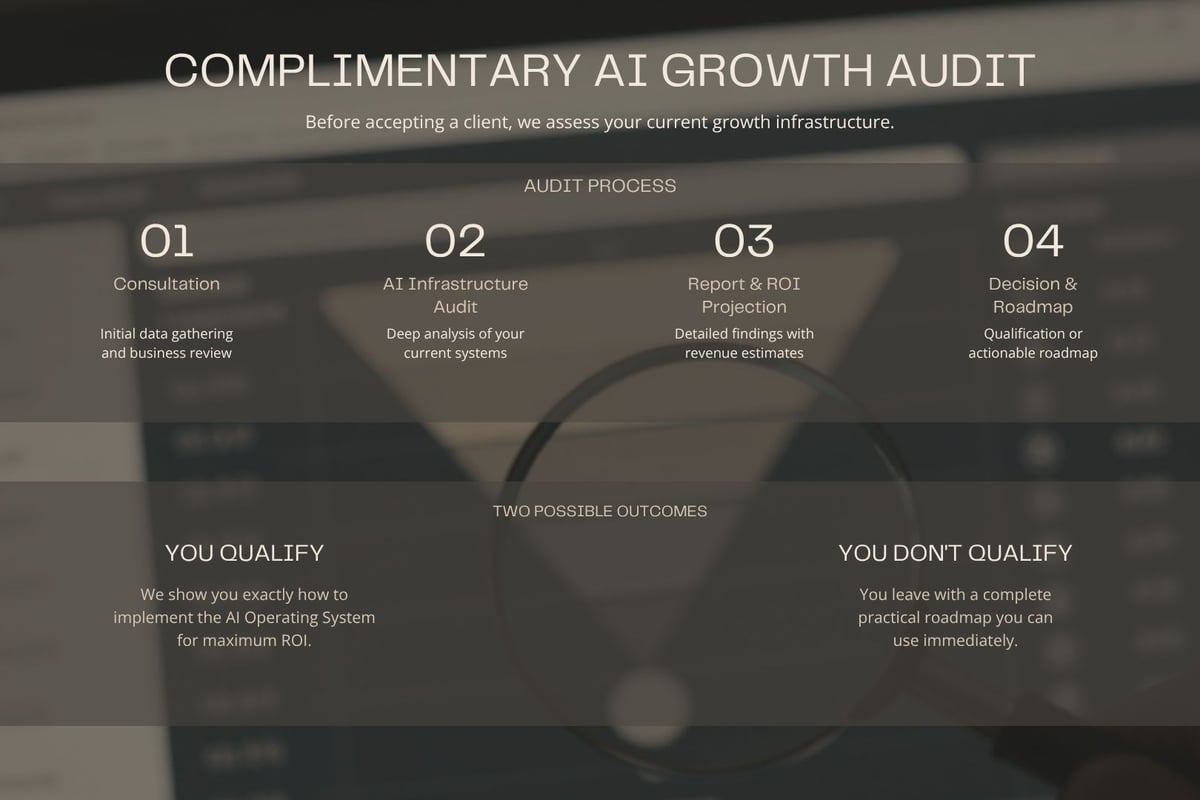
Businesses seeking to understand their specific revenue leak profile often start with a comprehensive assessment. The AI Scaling Strategy Audit provides this rigorous evaluation, identifying structural revenue leakage, quantifying commercial impact, and delivering a prioritized roadmap for AI intervention across acquisition, conversion, follow-up, retention, and reactivation.
Phase 3: Profit Engine Deployment
With leaks identified and quantified, businesses deploy targeted AI systems-what Leverage Scaling terms "Profit Engines"-designed to address specific revenue recovery opportunities. These aren't generic chatbots or simple automation; they're intelligent systems that apply sophisticated logic to customer engagement, timing optimization, and offer personalization.
Phase 4: Continuous Learning and Optimization
The most powerful aspect of businesses using AI in revenue operations is the continuous improvement cycle. Every customer interaction generates data that refines the AI's understanding of what works, when, and for whom. Conversion strategies that were effective last quarter may be superseded by new approaches the AI discovers through ongoing experimentation and analysis.
Phase 5: Scale and Expansion
As initial AI deployments prove their value, businesses expand into adjacent operational areas. A system that started by recovering abandoned quotes evolves to handle upsell recommendations, then customer reactivation, then predictive churn prevention-each expansion building on proven AI capabilities and operational trust.
Operational AI Across Business Functions
While revenue operations represent the most direct application, businesses using AI are deploying intelligent systems across multiple functional areas, creating integrated operational frameworks that share data, insights, and coordinated actions.
Customer Acquisition and Lead Management
AI transforms acquisition through:
- Intent signal detection that identifies high-probability prospects before they actively inquire
- Dynamic lead scoring that adjusts in real-time based on behavior, timing, and engagement patterns
- Intelligent routing that matches prospects with the right service provider based on skills, availability, and historical success rates
- Automated qualification that asks contextually relevant questions and branches based on responses
These systems operate with speed and consistency that manual processes cannot match. A prospect visiting a service business website at 11 PM receives intelligent engagement immediately-not the next business day when someone checks the inbox.
Conversion Optimization and Sales Enablement
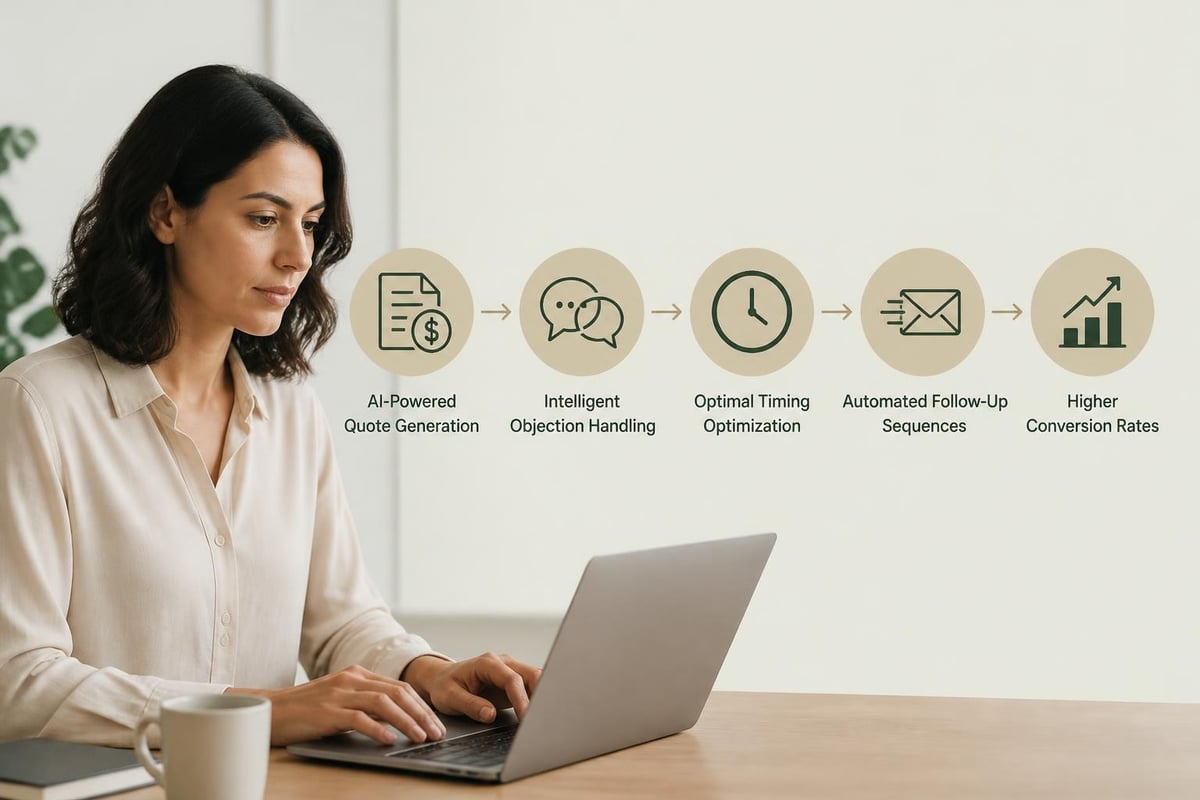
The conversion phase-from initial interest to signed contract-represents the highest-value opportunity for AI intervention. Deloitte's research on generative AI in enterprise highlights how businesses are deploying AI to personalize proposals, optimize pricing strategies, and predict objection patterns before they surface.
For service businesses, AI systems analyze historical conversion data to identify which proposal elements drive decisions, which pricing structures maximize both close rate and margin, and which follow-up timing patterns yield optimal results. The business automation systems that power these capabilities operate invisibly behind the scenes, executing proven strategies without requiring sales team intervention.
Retention and Customer Lifetime Value Expansion
Acquiring new customers costs five to seven times more than retaining existing ones, yet most service businesses invest disproportionately in acquisition while leaving retention to reactive processes. Businesses using AI flip this equation by deploying proactive retention systems that monitor customer health indicators and intervene before churn occurs.
AI-powered retention includes:
- Engagement pattern analysis that detects declining interaction frequency
- Usage trend monitoring that identifies service under-utilization
- Satisfaction signal processing that catches dissatisfaction indicators in communication tone and content
- Predictive churn modeling that assigns risk scores and triggers preemptive intervention
- Automated win-back campaigns that re-engage at-risk customers with personalized retention offers
The AI operating system approach integrates these retention functions into a unified framework that shares customer intelligence across all touchpoints, ensuring consistent, coordinated engagement that feels personal rather than automated.
Governance, Risk, and Responsible AI Deployment
As businesses using AI scale their deployments, governance frameworks become critical to managing risk, ensuring compliance, and maintaining customer trust. The regulatory landscape in 2026 has matured significantly, with frameworks like the NIST AI Risk Management Framework providing structured approaches to assessing and mitigating AI-related risks.
Building Trustworthy AI Systems
Service businesses face unique AI governance challenges because their customer relationships depend on trust, personal service, and reputation. AI systems that feel impersonal, make inappropriate offers, or fail to escalate complex situations appropriately can damage these critical relationships.
Effective governance requires:
- Transparency protocols that make customers aware when they're interacting with AI systems
- Human oversight mechanisms that flag edge cases requiring personal attention
- Bias monitoring that ensures AI doesn't develop discriminatory patterns in engagement or pricing
- Data privacy controls that protect customer information and comply with evolving regulations
- Performance auditing that continuously validates AI decisions against business values and customer expectations
The World Economic Forum's Future of Jobs Report emphasizes that successful AI adoption requires organizational change management that addresses both technical implementation and cultural adaptation. Employees need to understand how AI augments rather than replaces their roles, and customers need clarity about when they're engaging with automated systems versus human representatives.
Measuring AI Impact and ROI
The financial case for businesses using AI must be grounded in measurable outcomes, not theoretical benefits. Service businesses should track specific metrics that directly connect AI deployment to revenue impact.
| Metric Category | Key Performance Indicators | Measurement Frequency | Target Impact |
|---|---|---|---|
| Revenue Recovery | Value of re-engaged abandoned opportunities | Weekly | 15-30% recovery of identified leaks |
| Operational Efficiency | Time saved on manual follow-up tasks | Monthly | 40-60% reduction in manual effort |
| Conversion Performance | Quote-to-close rate improvement | Monthly | 10-20% lift in conversion rates |
| Customer Lifetime Value | Average customer tenure and spend | Quarterly | 25-40% increase in LTV |
| Response Time | Average time from inquiry to engagement | Daily | Sub-5-minute automated response |
These metrics should be tracked against pre-AI baselines to demonstrate clear improvement attribution. Harvard Business Review's guidance on embracing AI at work recommends establishing control groups where possible-segments of the business that continue operating without AI-to provide rigorous comparison data.
Integration Architecture and Technical Considerations
Businesses using AI successfully build integration architectures that connect AI systems to existing operational tools without requiring complete platform replacement. For service businesses, this typically involves connecting AI engines to:
- CRM systems for customer data and interaction history
- Scheduling platforms for appointment management and availability
- Communication tools for email, SMS, and calling capabilities
- Payment processors for transaction data and billing automation
- Marketing platforms for campaign coordination and lead nurturing
The managed AI approach addresses the reality that most service businesses lack in-house AI expertise and infrastructure. Rather than building custom AI systems from scratch, they deploy pre-built AI Profit Engines designed specifically for service business revenue operations, with integration frameworks that connect to common business platforms through standardized APIs and data connectors.
Data Quality and AI Performance
AI systems are only as effective as the data they process. Service businesses moving into AI deployment must address data quality issues that may have been tolerable in manual operations but become critical obstacles for AI performance.
Essential data quality requirements include:
- Consistent customer record structures across systems
- Complete interaction histories with timestamps and outcomes
- Standardized service categorization and pricing data
- Clean contact information with verified communication preferences
- Accurate attribution of revenue to specific marketing and operational touchpoints
The AI for business operations framework includes data normalization protocols that clean, standardize, and enrich operational data before AI systems begin processing it, ensuring high-quality inputs that drive reliable AI decision-making.
Industry-Specific AI Applications
While the core principles of businesses using AI apply across sectors, service businesses face unique operational patterns that require specialized AI approaches. Unlike e-commerce or SaaS businesses, service providers deal with scheduling constraints, geographic limitations, capacity management, and high-touch customer relationships that demand nuanced AI systems.
Service-specific AI applications include:
- Demand forecasting that predicts service request volumes by time, season, and external factors
- Dynamic scheduling that optimizes technician routes and appointment timing for maximum daily capacity
- Skills-based routing that matches customer needs with the most qualified available service provider
- Capacity planning that identifies when to expand service teams based on pipeline and booking trends
- Geographic expansion modeling that analyzes which new territories offer the highest ROI potential
These specialized applications require AI systems trained on service business patterns rather than generic business data. The revenue automation strategy developed for service businesses addresses these sector-specific requirements with AI Profit Engines calibrated for local service operational realities.

Change Management and Team Adoption
Technical implementation represents only half the challenge of businesses using AI successfully. The organizational change management component-helping teams understand, trust, and effectively leverage AI capabilities-determines whether AI systems deliver their potential value or languish underutilized.
Building AI Literacy Across Teams
Service business teams need practical AI understanding, not technical deep dives. Effective training programs focus on:
- What the AI system does and why it makes specific decisions
- How to review AI recommendations and when to override them
- Which customer situations require human escalation versus AI handling
- How to interpret AI-generated insights and apply them to customer conversations
- What data quality practices support better AI performance
The transition from manual to AI-assisted operations should be gradual, with AI initially supporting rather than replacing human decision-making. As teams build confidence in AI recommendations and see measurable results, automation can progressively handle more operational complexity with less human oversight.
Future-Proofing AI Investments
The AI landscape continues evolving rapidly, with new capabilities, models, and approaches emerging continuously. Businesses using AI must balance leveraging current capabilities while maintaining flexibility to adopt future innovations.
Future-proof AI strategies include:
- Platform-agnostic architectures that can swap AI models without rebuilding entire systems
- Continuous learning systems that improve with new data rather than requiring periodic retraining
- Modular AI components that can be upgraded, replaced, or expanded independently
- Vendor partnerships that provide ongoing AI capability updates as part of service agreements
- Internal AI governance teams that evaluate emerging AI capabilities against business needs
The rapid pace of AI advancement means that AI systems deployed in 2026 will likely be augmented with capabilities that don't yet exist. Service businesses should choose AI partners committed to continuous innovation rather than static product offerings.
Businesses using AI in their revenue operations are capturing revenue that their competitors leave on the table, operating with efficiency that manual processes cannot match, and scaling growth without proportional increases in operational overhead. The transformation from reactive, manual revenue management to proactive, AI-driven revenue optimization represents the defining competitive advantage for service businesses in 2026. Leverage Scaling provides the AI Revenue Operations System specifically designed to help local service businesses identify revenue leaks, quantify their impact, and deploy AI Profit Engines that automatically capture, recover, and retain more revenue while you focus on delivering exceptional service.